If you’ve noticed one of your toes starting to bend downward at the middle joint — almost like an upside-down V — you may be dealing with a hammer toe. It’s a condition that can sneak up on you gradually, and many people don’t realize what’s happening until pain or pressure makes it hard to ignore. Hammer toes develop slowly over time, and what starts as a minor annoyance can become a real problem if left untreated.
What Exactly Is a Hammer Toe?
A hammer toe is a contracture, or bending, of the toe at the first joint of the digit, called the proximal interphalangeal joint. This bending causes the toe to appear like an upside-down V when looked at from the side. Any toe can be involved, but the condition usually affects the second through fifth toes, known as the lesser digits. Hammer toes are also more common in females than males.
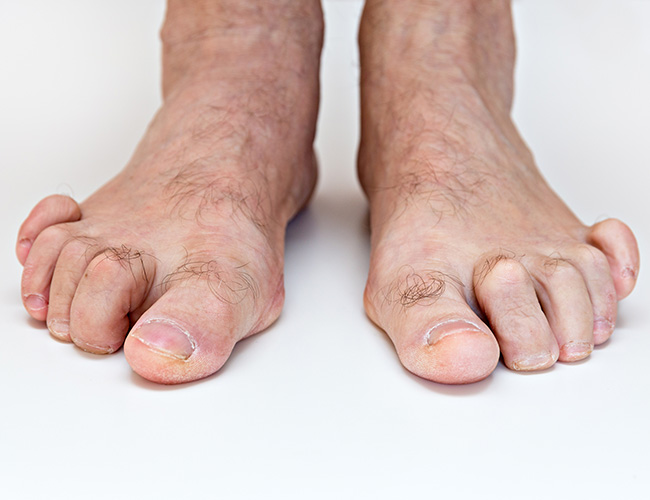
There are two types to be aware of:
Flexible Hammer Toes are less serious because they can be diagnosed and treated while still in the developmental stage. Because they are still moveable at the joint, we have more conservative options available to us.
Rigid Hammer Toes are more developed and more serious. This type is often seen in patients with severe arthritis, or in patients who waited too long to seek treatment. The tendons have become tight, the joint misaligned and immobile, making surgery the usual course of treatment — which is exactly why we always encourage patients not to wait.
What Causes Them?
Hammer toes develop because of an abnormal balance of the muscles in the toes, which causes increased pressure on the tendons and joints, leading to the contracture. Heredity and trauma can also play a role, as can arthritis, which disrupts the balance around the toe. And one of the most common culprits? Shoes that are too tight and cause the toes to squeeze together. This is especially important to keep in mind for children, whose feet can outgrow their shoes rapidly.
Recognizing the Symptoms
Here’s what to watch for:
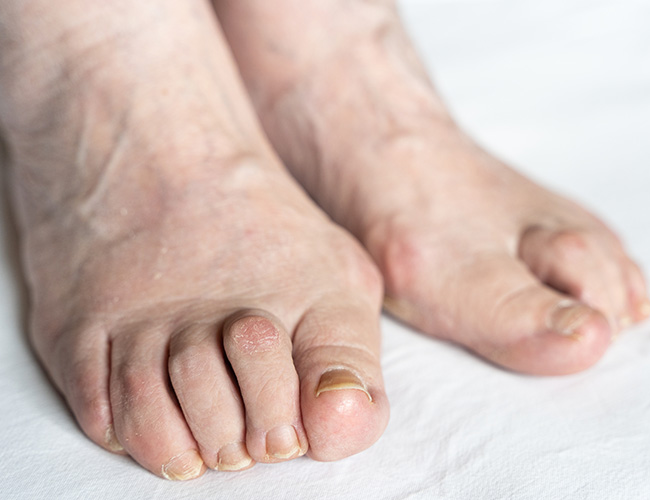
- Pain at the top of the bent toe upon pressure from footwear
- Formation of corns on the top of the joint
- Redness and swelling at the joint contracture
- Restricted or painful motion of the toe joint
- Pain in the ball of the foot at the base of the affected toe
If any of these sound familiar, it’s time to give us a call.
What Can You Do at Home?
While home care won’t cure a hammer toe, it can make you a lot more comfortable in the meantime. Here are a few things that can help:
- Apply a commercial, non-medicated hammer toe pad around the bony prominence to decrease pressure on the area
- Wear a shoe with a deep toe box
- If the toe becomes inflamed and painful, apply ice packs several times a day to reduce swelling
- Avoid heels more than two inches tall
- A loose-fitting pair of shoes can help protect the foot and reduce pressure, making walking easier until you can get in to see us
- Avoid shoes that are too tight or narrow
Just remember — these steps will make the hammer toe feel better, but they won’t fix it. A visit to our office will be necessary to restore normal foot function.
When to See Us
If pain persists, please don’t put it off. Hammer toes left untreated tend to become rigid, making non-surgical treatment much less of an option down the road.
Diagnosis and Treatment
When you come in, we’ll examine the affected area and take X-rays to recommend a treatment plan specific to your situation. The earlier we catch it, the more options we have. Here’s a look at what treatment may involve:
Padding and Taping: Often the first step. Padding minimizes pain and allows you to stay active, while taping can help correct the muscle imbalance around the toes to relieve stress and pain.
Medication: Anti-inflammatory drugs and cortisone injections can be prescribed to ease acute pain and inflammation caused by the joint deformity.
Orthotic Devices: Custom shoe inserts made right here in our office may help control foot function, reduce symptoms, and prevent the hammer toe from getting worse.
Surgical Options: When needed, several surgical procedures are available. For less severe deformities, surgery removes the bony prominence and restores normal alignment of the toe joint to relieve pain. More severe hammer toes may require additional steps. Recuperation takes some time, and some swelling and discomfort are normal for several weeks following surgery — but any pain is easily managed with medications we’ll prescribe.
Prevention
The good news is there’s a lot you can do to help prevent hammer toes from forming or getting worse:
- Wear supportive shoes to help prevent deformities, especially if you tend toward flat feet
- Ask us about custom orthotics, which may slow the progression or even prevent hammer toes from developing
- Avoid shoes with narrow or pointed toe boxes that compress the toes
We’re here to help you stay on your feet and feeling your best. If something doesn’t feel right, don’t wait — give Barrett Foot & Leg a call today.